
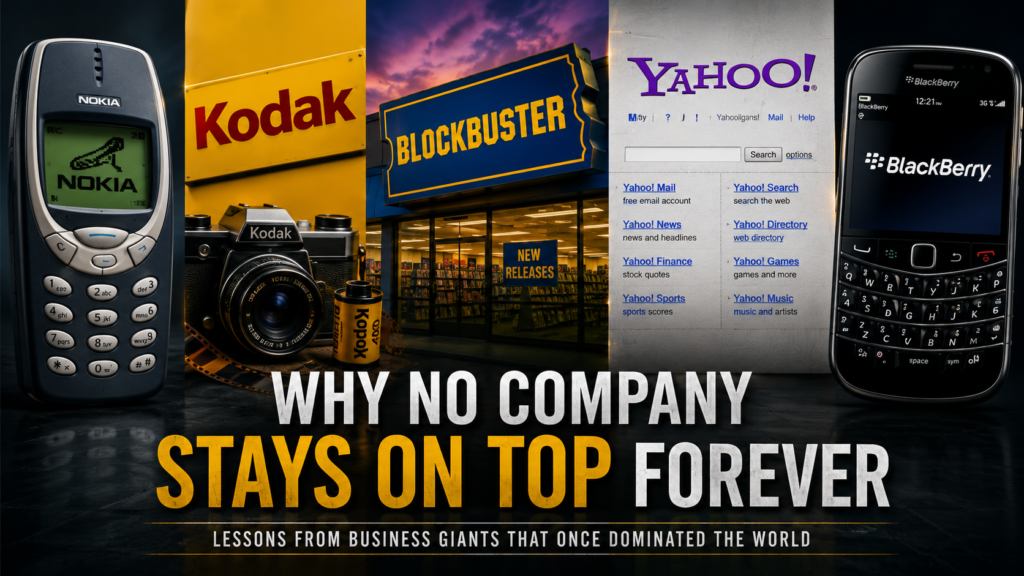
Most folks figure such companies can’t be touched. One wrong move might change everything. Rivals watch closely, waiting. People rely on what it offers every day. News outlets keep mentioning its name. Money flows in because of past wins. Trust builds slowly until it seems solid.
Outside views suggest a lasting grip on the market seems certain. Yet stability might be more fragile than it first appears.
Turns out, the past remembers things another way.
Once, certain giants ruled their industries without challenge. Big names, huge reach – these firms looked like they would last forever. Their profits soared, people trusted them, and recognition stretched across continents. Still, time changed everything. Little by little, some faded; others vanished completely. What felt permanent turned fragile. Not even dominance offered real safety.
What they tell us shows something key about how companies really work
Tomorrow might not follow today’s wins. Success has no promises.
Markets change.
Technology evolves.
Consumer behaviour shifts.
New competitors emerge.
Failing to change puts firms at risk, even if they used to dominate their field. Success in the past offers no shield when the world moves on.
Once on top, many big companies have slipped from power despite once dominating their fields.
Their rise is inspiring.
What happens when they drop teaches something? Their stumble holds a lesson inside.
Still, those teachings hold strong today.
The Danger In Believing Success Lasts Forever

Comfort sneaks up most when success starts to settle. How ease turns into danger few ever notice until too late.
Years of dominance can quietly convince a leader that staying on top is automatic.
Still, what’s the point of fixing something that isn’t broken?
Customers are buying.
Revenue is growing.
The brand is trusted.
Change always shapes how companies operate.
Fresh ideas keep moving even when business seems fine.
Competitors continue experimenting.
Technology continues to advance.
Out here, what people want keeps shifting. Not standing still, ever.
Comfort, not weakness, trips up most top players in business. They stall when they stop pushing.
Comfort tends to sneak in right before things start falling apart.
Five Former Industry Leaders
1. Nokia Was Top In Phones But Lost Out When Smartphones Arrived

Back when pocket computers hadn’t taken over every moment, Nokia ruled the handheld world without question.
During the early 2000s, Nokia phones were everywhere.
They were:
- durable
- reliable
- affordable
- trusted globally
Phones felt like Nokia back then for most folks.
Back then, few believed anything could shake its grip on the scene. Size alone made it look untouchable.
After that, things changed.
Out of nowhere, phones started shifting what people wanted. A quiet shift happened when gadgets got smarter than anyone expected.
Finding a call wasn’t their main goal anymore. Most looked at screens for more than just quick notes between friends. Using apps began to matter much more than dialling names. Messaging stayed useful but took a back seat. Talking live? Not always top of mind now.
They wanted:
- apps
- touchscreens
- internet access
- better user experiences
Only after others moved did Nokia begin to respond.
Where most chased the latest phone networks, Nokia stuck with what it knew before.
A sudden shift unfolded. The outcome hit hard.
Years passed. The firm vanished from the top. Once, it shaped how phones worked. Now others led instead.
What happened to Nokia shows companies something quiet: standing on top today means little tomorrow. A lead can vanish when change moves faster than decisions do. Comfort slows reaction. The pace shifts while habits stay fixed. Past success offers no shield against new patterns. Size alone cannot block disruption. What worked before might not work at all now.
2. Kodak Invented the Future But Missed It

A tale of quiet dominance, then silence – Kodak unfolded unlike most company paths. Its rise felt inevitable. Then came a stillness no one predicted.
Years went by with Kodak leading how people took pictures. Still, change crept in slowly behind the scenes.
People started thinking of it whenever they thought about taking pictures. It shaped how folks saw photography for years.
Strangely enough, Kodak played a part in building the tech that later upended its own empire.
A first look at pixels came through their hands. This team built a machine that caught light without film.
Yet leaders worried digital photos might weaken their strong film profits.
Backward steps defined Kodak’s move, not bold leaps ahead. Guarding what it had became the focus, rather than reaching for what could be.
While that was happening, rivals poured resources into tech upgrades.
Faster shifts showed up in how people bought things.
Film gave way to digital photos over time.
Kodak’s dominance disappeared.
What it shows sticks with you. A strong point comes through without saying much
What if the biggest danger isn’t rivals at all?
Staying put feels safer sometimes. Yet change skips those who wait. Moving first means keeping control. Hesitation hands power away. Growth hides where comfort ends.
3. Blockbuster The Giant That Overlooked Streaming

Flicks on Friday? That meant walking into a bright red store back then.
The company dominated video rentals.
Its stores existed everywhere.
Life often included trips to rent films at Blockbuster for plenty of people.
A fresh thought appeared next.
What if films arrived at homes without anyone needing to drive anywhere? Instead of heading out, people might just wait while cinema comes to them.
And later:
What if movies could be streamed online?
Most folks have heard how Blockbuster could’ve bought Netflix way back when.
Streaming never crossed their minds as something worth worrying about.
Over time, people began acting differently as shoppers.
Now comfort matters more than walking into a shop.
Streaming transformed entertainment.
Stuck in old ways, Blockbuster moved too slowly to keep up.
Nowadays, Netflix stands among the top names in global entertainment, whereas Blockbuster shows what happens when markets shift faster than companies adapt.
4. Yahoo The Once Leading Web Innovator Now Struggles To Stay Relevant

Back when the web first started growing, Yahoo stood out as a major player on the scene.
Yahoo was used by millions
- search
- news
- online services
Faster than most expected, Yahoo seemed ready to lead online life. Then everything shifted under quiet pressure from new players.
Still, as Yahoo branched out in every direction, rivals zeroed in – perfecting just one task at a time.
Google transformed search.
Facebook transformed social networking.
Some firms focused tightly, moving fast to change things. Others shifted quickly, building new approaches one after another.
Still searching, Yahoo never quite settled on who it was meant to be.
Slowly, its grip on power began to loosen.
The lesson?
Lost direction often follows rapid expansion. A clear path matters more than speed.
What a brand stands for needs to show up clearly. A clear identity shapes how people see it. Standing out happens when the message stays focused. Recognition builds on consistent choices. Attention follows distinct signals. Being remembered comes from deliberate effort.
5. BlackBerry Once Led Smartphones But Faded From Public Focus

Back then, most business folks swore by BlackBerry – until iPhones started showing up. Phones ran on keyboards, not glass, and emails arrived fast, no apps needed. That changed once touchscreens caught on. Suddenly, everyone wanted music, web browsing, and games – all in one pocket machine. The shift felt slow at first, then happened overnight. What worked before just didn’t matter anymore.
Executives in charge of companies found they really liked it.
Governments used it.
It showed how companies talked. What flowed between offices started here.
Typing on real keys made it famous.
Yet people want different things now.
People wanted:
- better apps
- touchscreen experiences
- multimedia capabilities
- larger ecosystems
Surprisingly fast, tastes changed right under BlackBerry’s nose.
Even though its offerings held steady in certain spots, rivals picked up on shifts in buyer habits quicker.
One day, the top spot slipped away from BlackBerry. Not slowly – just gone, like a light turning off mid-sentence.
Here’s something real – how it played out shows what really matters in business
Success comes if a product moves in step with people’s next choices instead of their past ones.
The Hidden Thread In Their Downfall
Even so, working across separate fields didn’t stop their paths from feeling much alike.
Some fell apart when facing any of these issues:
- resistance to change
- slow innovation
- overconfidence
- protecting outdated business models
- ignoring customer behaviour shifts
- underestimating competitors
Each one had what it needed to get going. Not a single firm was short on means.
None lacked talent.
Some started miles ahead of others.
Still, they said no.
Why?
Success in business doesn’t last forever.
Innovation Is Necessary

Most businesses see fresh ideas as something temporary.
Most top firms see new ideas grow from daily habits. Good workplaces let creativity spread through routine actions.
Innovation is not only about technology.
Keep wondering. That matters most
- What is changing?
- Customers wonder what comes after this.
- What could disrupt us?
- What assumptions might become outdated?
Curiosity sticks around long after success shows up, for those firms still standing years later.
Winning today doesn’t guarantee tomorrow – staying ahead takes constant effort.
The Risk of Loving What Used to Be
Stuck in old ways, even thriving companies find it tough to move on from past wins. Success once came easily – now change feels risky, yet staying still brings its own danger.
Old wins might just box you in.
Tomorrow might ignore what made fortunes just a day before.
Change scares businesses, so they stick to what they know. Yet staying still can be riskier than moving.
Staying stuck can backfire just as badly.
The business world rewards adaptation.
Over time, it always shows up again.
Startups Learning From Companies That Failed

Success tales grab most founders’ attention. Yet few look beyond the shine.
Yet broken empires whisper truths louder than success ever could.
Startups can learn to:
- stay adaptable
- listen to customers
- embrace change early
- avoid complacency
- focus on long-term relevance
- challenge assumptions regularly
Small size might just work in your favor.
Large organizations often move slowly.
Quick turns come easy to new businesses.
Faster experiments happen when they try new steps each time.
Change finds them ready, shifting without delay. Their pace matches the moment, staying close to what happens. When things turn, they move just as fast – no lag, only motion.
Chasing greatness isn’t the point. Size rarely tells the real story. What matters shows up quietly. Big doesn’t mean better. Growth without purpose drifts. Staying focused feels different. Meaning hides in small steps. Loud wins grab attention. Quiet progress lasts longer. True work speaks low.
Staying meaningful matters most when everything around shifts. What counts is keeping pace without losing footing. Change moves fast – so does what people value. Falling behind isn’t forced; it’s chosen by standing still. Relevance doesn’t shout – it whispers through quiet adaptation.
Adaptation Overcomes Size

Faster than ever, the way companies operate keeps shifting. What feels steady today twists tomorrow. Speed drives everything now – no pause, just motion. Old rhythms fade while new patterns emerge overnight. Change isn’t coming – it already arrived.
Faster machines now handle tasks once done by people. Smarter software learns from mistakes, improving over time.
Changes never stop in how people choose what they buy.
Technology creates new opportunities every year.
Out here, big doesn’t mean safe. Size offers no shield by itself.
Survival in business usually belongs to those who shift early, long before pressure forces their hand.
Flexibility shapes what comes next, curiosity keeps ideas moving, evolution happens when effort follows interest.
Final Thoughts

Business history shows how pride can fade fast when times change. A single mistake often echoes longer than success ever does.
Forever isn’t how long a company keeps its lead. A peak always comes before the fall, even if no one sees it coming yet.
Market leaders rise.
Industries change.
New challengers emerge.
Longevity isn’t about how big a company grows. It skips fame entirely. Lasting power hides behind choices most ignore. Forgotten names once towered above others. Size never guaranteed survival. Popularity fades fast. Resources drain without direction. What sticks? Patterns unseen at first glance. Resilience shapes stay hidden until tested. Time reveals what shortcuts cannot build.
Change comes easy for them.
Success didn’t slip through Nokia’s fingers, nor did it vanish for Kodak. Blockbuster once filled streets with stores while Yahoo shaped early web habits. BlackBerry powered emails before touchscreens ruled. Each had fame stacked high, yet none stayed on top simply by having won before.
Comfort often follows success, shaping their choices. What came next showed how ease can quietly reshape purpose. Moments of triumph had settled into routine. Their paths reflected stillness after rising high.
Founders might notice this truth first. Business leaders see it too. Yet the point hits home most when you’re building something yourself. What stands out? A pattern appears. Not magic. Just consistency. Entrepreneurs pick up on that faster. The message becomes real through doing, not hearing
Tomorrow might not care about your win today.
Learning never stops if you want to get ahead. Those who keep asking why often find better ways forward. Growth comes more easily when old ideas are tested again. Staying curious opens paths others miss.
Sure, strength matters – yet survival often picks different winners.
Fastest adaptation belongs to them.